Moving to Springfield, Ohio in 2026: The Complete Insider Guide (Learn More)
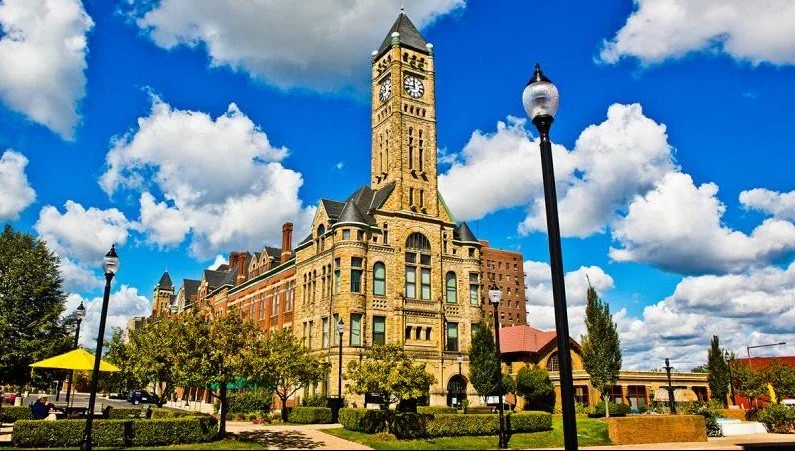
Springfield, Ohio doesn't make the national headlines often — but when it does, it's because something real is happening here. Right now, that something is a city quietly transforming itself into one of the most compelling relocation destinations in the Midwest. Affordable. Evolving. Honest about its challenges. And for the right buyer, an extraordinary opportunity.
Here's everything you actually need to know before you move.
The Economic Landscape: A City on the Upswing
Springfield's biggest 2026 story isn't a rumor — it's a $1.3 billion data center operated by Vultr coming online in the area, bringing 120 high-tech jobs directly and dozens more indirectly through service, construction, and support sectors. That kind of infrastructure investment doesn't just create jobs; it signals to other employers that the region is worth betting on.
What does that mean for you as a buyer or renter? Demand for housing — especially near employment corridors — will rise. Anyone buying now is buying ahead of that curve.
Economic Indicator Details Major New Employer Vultr Data Center ($1.3B investment) New Jobs Created ~120 direct high-tech positions Cost of Living vs. National Average ~12% below Median Starter Home Price ~$130,430 Median Mid-Tier Home Price ~$199,194 City Infrastructure Investment $75M in service expansions
Don't sleep on this: Data center economies have a multiplier effect. For every 1 direct tech job created, regional economists estimate 3–5 indirect jobs follow in food service, logistics, healthcare, and retail. Springfield's job market in 2026 is a slow-burn story with serious long-term upside.
Housing Market: Record Highs, Improving Affordability
Yes, Springfield saw record home prices in 2025. But Redfin analysts project affordability will begin to improve through 2026 — meaning buyers who act now are entering at or near the peak, while those who wait may find demand-driven competition increasing as the local economy strengthens.
Home Type Median Price Who It's For Starter Homes ~$130,430 First-time buyers, investors Mid-Tier Homes ~$199,194 Growing families, upsizers Rentals (1BR avg.) ~$648/mo Newcomers testing the market
What most buyers don't consider: Springfield's affordability gap compared to Columbus and Dayton is enormous. A mid-tier Springfield home at ~$199K would cost $320,000–$400,000+ in comparable Columbus suburbs. For remote workers employed at Columbus or Dayton wage scales, Springfield offers one of the best arbitrage opportunities in Ohio.
Pros of Buying in Springfield Right Now
✅ Entry prices still 40–60% lower than Columbus metro
✅ Infrastructure investment driving long-term appreciation
✅ City investing $75M in service upgrades — utility reliability improving
✅ Water meter modernization project underway through 2026
✅ Strong rental demand creates excellent investment property ROI
Cons / Things to Weigh Carefully
⚠️ Prices hit recent record highs — don't overbid in a cooling market
⚠️ Social tension and community uncertainty can affect neighborhood dynamics
⚠️ Some older housing stock requires pre-purchase inspection diligence
⚠️ Limited luxury or new-construction inventory at this price point
Insider move: If you're a first-time buyer, VA loan eligible, or considering an investment property, ask your agent about local and state financing programs that stack onto federal options — they can dramatically reduce your effective purchase cost.
Neighborhoods: Where to Actually Live
Northridge is the name that consistently rises to the top for families — quiet streets, strong safety metrics, and a community feel that makes it genuinely livable. But Northridge isn't the only story.
Neighborhood Best For Vibe Northridge Families, first-time buyers Safe, quiet, suburban Near Eastside Investors, renovators Emerging, higher upside Downtown Core Young professionals, renters Walkable, evolving South Fountain History lovers, character seekers Victorian-era charm
What the listicles won't tell you: Block-by-block variation in Springfield is significant. Two streets in the same neighborhood can have very different trajectories. A local agent who knows which blocks are improving — versus which are stagnant — is worth more here than anywhere. This is exactly the kind of hyper-local intelligence that The Haney Group at Coldwell Banker Heritage brings to every buyer consultation. With a deep Springfield footprint and real-time market data across Springfield, Dayton, and Columbus, Doug Haney and his team don't just show you homes — they show you which streets are worth your money.
Cost of Living: Monthly Reality Check
Expense Single Person Family of Four Total Monthly $1,713–$2,189 $3,891–$4,821 Housing ~$648 ~$1,187 Food ~$331 ~$1,077 Transportation ~$300–$400 ~$500–$700 Utilities ~$120–$150 ~$200–$250 Healthcare ~$200–$350 ~$600–$900
For context: the average American renter spends 30–35% of income on housing. In Springfield, that number drops to 20–22% for median earners — freeing up capital for savings, home improvement, or investment.
Community & Social Climate: Eyes Open
Springfield is genuinely navigating a complex moment. Its Haitian immigrant community — which grew significantly during the early 2020s — is facing uncertainty as Temporary Protected Status timelines shift at the federal level. This has created social tension that national media has amplified.
What does this mean for you as a mover?
Realistically:
The majority of Springfield residents go about daily life without friction
Local government and community organizations are actively managing the transition
Businesses that relied on immigrant labor may face workforce adjustments
Community character is in flux — which is uncomfortable, but also typical of cities adapting to growth
Springfield has been called a microcosm of America for good reason: it contains all the tensions and possibilities of a country figuring itself out in real time. That's not a reason to avoid it — it's a reason to engage thoughtfully with it.
The Buying Process: What Smart Movers Do Differently
Most people moving to a new city make the same mistake: they search Zillow from 300 miles away, pick a house they like online, and show up hoping for the best. The Springfield market in 2026 doesn't reward that approach.
A smarter framework:
Get pre-approved before you tour — sellers in a demand-pressured market won't take unqualified buyers seriously, even at these price points.
Work with someone who has contractor relationships — older Springfield housing stock often needs post-purchase work. An agent connected to vetted tradespeople is a practical advantage, not a luxury.
Ask about seller history and days-on-market — in a market coming off record highs, motivated sellers exist. Knowing who they are takes local knowledge.
Think in 5-year increments — with Vultr coming online and $75M in city investment moving through the system, Springfield's upside case is legitimate. Don't buy for today's market; buy for 2029's.
The Haney Group at Coldwell Banker Heritage covers exactly this territory — Springfield, Dayton, and Columbus Ohio— with data-driven pricing strategies, professional photography and staging for sellers, and a financing network that includes trusted partners for VA loans and first-time homebuyer programs. Doug Haney has built his practice on five-star reviews, repeat clients, and referrals. That doesn't happen by accident in a market this honest.
📞 (937) 821-8103 | ✉️ doughaney@thehaneygroup.com | 331 Mount Vernon Avenue, Springfield, OH 45503
Final Verdict: Should You Move to Springfield in 2026?
Move here if: You're a remote worker, value-conscious family buyer, first-time homeowner, or investor looking for real appreciation potential at a price point that still makes sense.
Think twice if: You need a large luxury home market, prefer a fully established urban core, or are uncomfortable with a city that's openly working through social growing pains.
The bottom line: Springfield in 2026 is a city that rewards people who do their homework — and penalizes those who don't. The data is good. The trajectory is promising. And having the right local team in your corner is the difference between a great decision and an expensive lesson.